Chess
I. Core Essence: A Perfect Battle of Thoughts
An absolutely equal intellectual game
Both sides start with perfectly symmetrical information and resources (16 pieces), and the outcome depends entirely on strategies, calculations and psychology. It is the ultimate symbol of fair competition.
Integration of deep logic and skills
Tactics: Intense physical confrontations through forceful means (containing, attacking both sides, surprise attack).
Strategy: Long-term planning and layout (control center, coordination of minor forces, safety of the king).
Calculation: The ability to predict future scenarios.
Psychology: Being able to perceive the opponent’s intentions during the game and manage one’s own emotions.
II. Chess Piece Roles: A Miniature Kingdom and Society
Each chess piece embodies a unique role and philosophy:
Wang: The symbol of the country. Survival equals victory. Although its actions are slow, it is the core of the entire system.
After: The most powerful force. It represents resource integration and flexibility, and is the “chief executive officer” on the chessboard.
Vehicle: Castle. It symbolizes a solid defense line and long-range direct firepower, serving as the strategic foundation.
Image: Bishop. Represents the penetration of diagonal lines and the overall perspective, symbolizing the distant influence of different cultures and ideas.
Ma: Knight. It represents unconventional thinking and innovation. The unique rules of “The Horse’s Day” symbolize breaking away from the linear framework and achieving victory through unexpected methods.
Soldier: Commoner and Vanguard. The largest number, seemingly weak, but possessing the potential for transformation – symbolizing “ordinary individuals, through perseverance, reach the bottom line and can ascend to any role”, it is the most profound metaphor on hope and struggle on the chessboard.
III. Learning Value: Multi-dimensional Thinking Development
For Children and Adolescents:
Enhance logical thinking and concentration: Learn to plan steps and anticipate consequences.
Cultivate patience and resilience: Accept failure, analyze the reasons, and start over again.
Establish rules and global awareness: Understand the creative freedom within the constraints of the rules.
For adults:
Strategic thinking training: Applied to resource allocation and long-term planning in business and life.
Maintaining brain vitality: It is an excellent mental exercise for preventing cognitive decline.
Pure intellectual pleasure: Detach from the screen and enjoy the joy of deep thinking.
IV. Culture, Art and Sports
A thousand years of history: Originating in ancient India, it was spread to Europe via Persia and Arabia, becoming a global intellectual sport and serving as a testament to cultural exchanges.
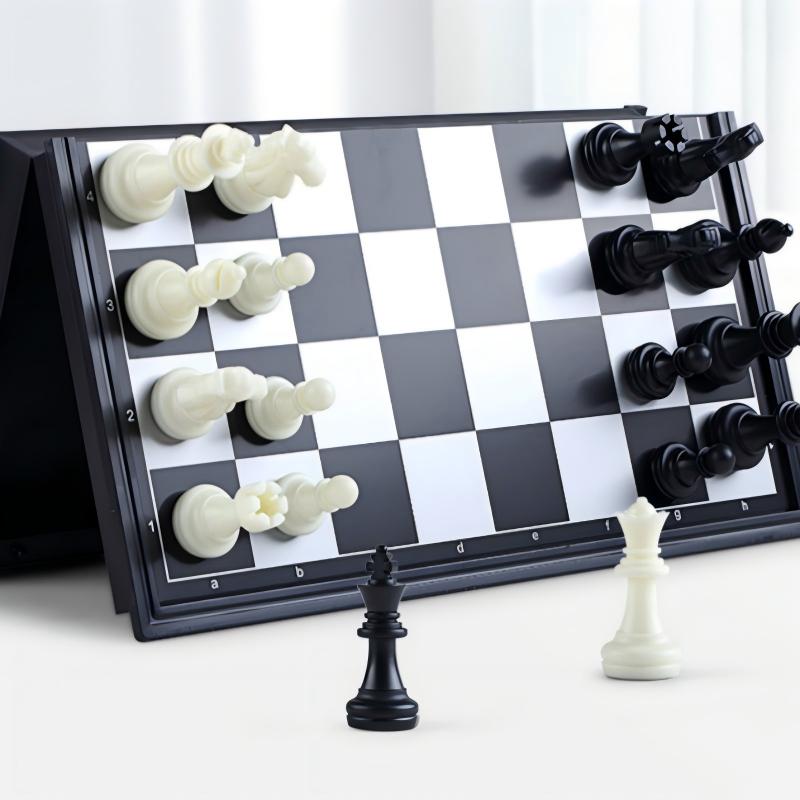
Artistic carriers: The chessboard and the chess pieces themselves are exquisite works of art, ranging from minimalist modern designs to retro luxurious styles.
Top-level competition: The World Championship is the ultimate showdown of human intelligence. The challenges from artificial intelligence (such as DeepBlue, AlphaZero) have further spurred humanity’s exploration of the boundaries of its own intelligence.
V. How to Start and Improve?
The first step for beginners:
Learn the rules and the moves.
Understand the basic objective: To eliminate the opponent’s king.
Remember the “Three Principles of the Opening”: Control the center, make moves quickly, and perform the king and horse exchange to ensure the safety of the king.
The path to advancement:
Learn the principles of classic opening moves (such as the Italian Opening, the Sicilian Defense).
Master the basic tactical combinations.
Studying endgames is the key to extracting the essence of chess skills.
Play more chess and do more game reviews: Analyzing the gains and losses of each move is the fastest way to grow.
Resource Utilization: Utilize online platforms such as Chess.com and Lichess, which offer comprehensive learning and playing functions ranging from beginner to master levels.
Summary: Why is chess never outdated?
Because it is built on the simplest rules (64 squares, 32 pieces), yet creates the most complex possibilities (the number of possible game scenarios far exceeds the number of atoms in the universe). It is a “war without elements of luck”, forcing you to take full responsibility for every decision you make.
It teaches us the most profound truth:
The advantage lies in accumulation (good situations arise from each step of solid accumulation).
Difficult situations often contain hidden vitality (what seems like a hopeless situation might actually conceal ingenious “opportunities” or favorable chances).
The most important resource is time (“steps” being the advantage).
The ultimate victory often lies not in how many targets are conquered, but in achieving that single and decisive goal.
Chess is combat, poetry, mathematics, a silent debate, and an infinite creation within a limited space and time. It invites every participant to become the commander of their own thoughts, strategizing on a chessboard and achieving victory over long distances.