
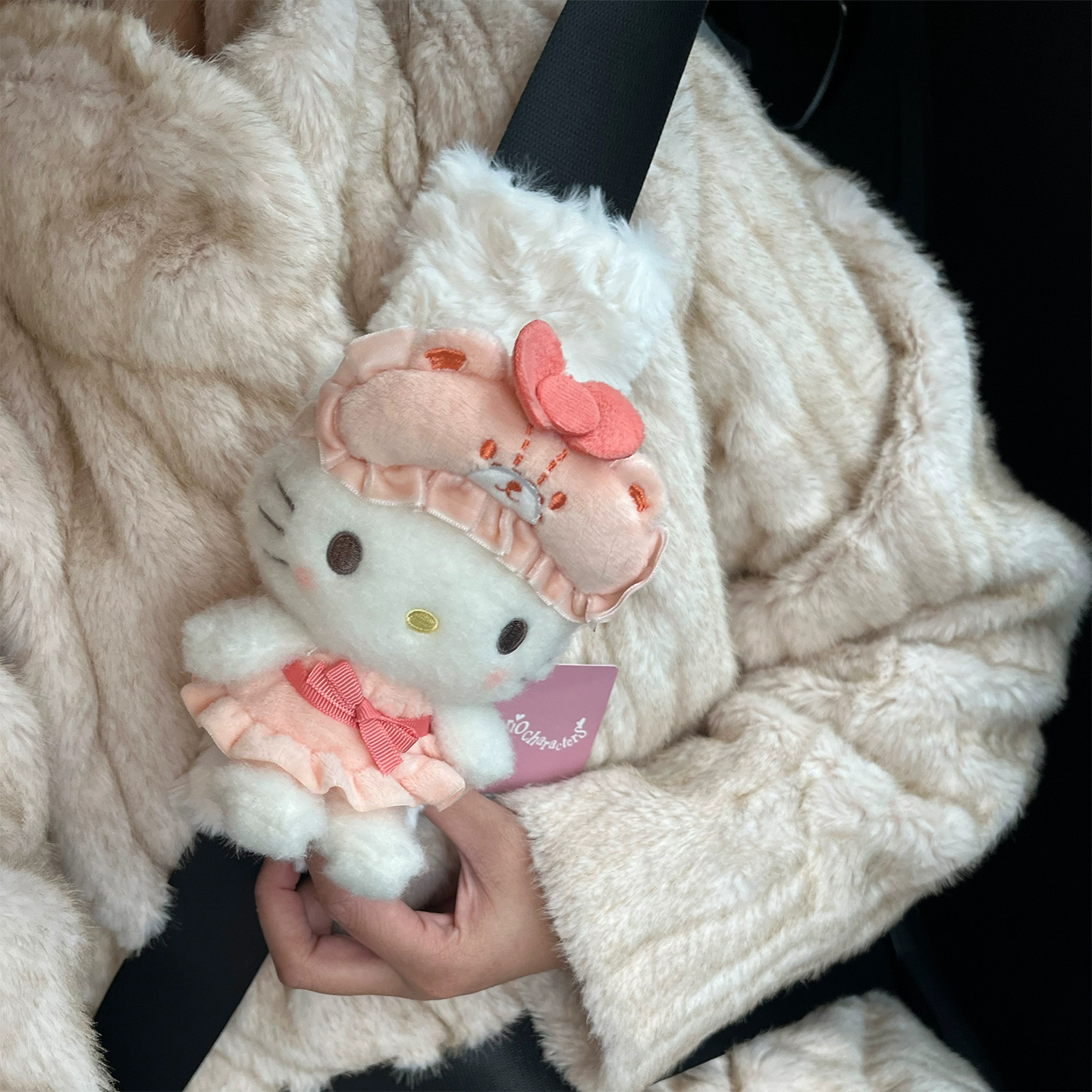
Car seat belt decoration
I. Its Attractiveness: Why would people want to decorate it?
Personalized Expression: The interior of a car usually has a monotonous color scheme (mostly black, gray, and beige). The decoration kits can introduce colors, patterns (such as cartoons, trendy IPs, constellations) or textures (such as plush, leather), making the interior space more personalized.
Improve comfort:
Relieve the friction on the neck or collarbone caused by the seat belt, especially for those who wear thin clothes in summer or have sensitive skin.
In winter, a plush cover can be installed to prevent the cold fabric straps from directly touching the skin.
Function Extension:
Some designs feature small pockets, which can be used to temporarily store cards, receipts, pens or small items.
It serves as a “reminder”, especially when using bright and interesting decorative covers for children, which can increase their willingness to fasten their seat belts voluntarily.
II. Core Risks and Security Hazards (Must Be Alerted to!)
This is the primary prerequisite for discussing all decorations:
Affecting the pre-tightening and force-limiting functions of seat belts: The original factory seat belt system is a sophisticated engineering device. During a collision, the seat belt will instantly tighten and, when the force is too great, it will appropriately release the force limit to protect the chest cavity. Overly thick, hard, or highly frictional decorative covers will seriously interfere with this process, potentially leading to:
It is unable to effectively restrain the body, thereby increasing the risk of slipping off.
The inability to exert normal force resulted in excessive pressure on the chest, causing internal injuries.
Changing the position of the seat belt: The decorative cover may cause the seat belt to shift its fixed position on the shoulder, failing to fit the optimal force-bearing position of the body (it should cross the center of the shoulder, the collarbone, rather than the neck or the arm).
Material Hazards:
Flammable: Inferior materials may catch fire or produce toxic smoke in an accident.
Weak structure: The seams or adhesions of the decorative cover itself may break under force, causing fragments to fly off.
Law and Liability: In some countries or regions,擅自 modifying safety equipment may affect the vehicle’s annual inspection, or after an accident, the insurance company may reduce the compensation amount citing “modifying the equipment without authorization affects safety”.
III. If you insist on using it: Safety Selection and Usage Guidelines (Bottom Line Principles)
If after careful consideration you still decide to use it, please be sure to follow the following “Minimum Intervention Principle”:
Choose “knitted” instead of “sewn or glued”.
It must be a detachable cover that can be easily removed. It must not be permanently fixed to the seat belt webbing by means of stitches, glue or any other permanent method.
The material must be thin, soft, smooth and elastic:
Material: Preferably use high-quality elastic fabric with good elasticity and a thickness of no more than a few millimeters. Avoid using heavy plush, hard leather, items with hard objects (such as rivets, sequins), or those with hard internal support plates.
Fixed method: It is best to rely solely on elastic packaging, or use extremely thin and low-strength Velcro, to ensure that when subjected to extremely high tension, the decorative cover can easily separate or slip off from the seat belt without interfering with the normal operation of the seat belt.
Make sure to avoid covering any critical areas:
The decorative cover must not cover the retractor, the lock tongue and the latch at the connection point between the seat belt and the B-pillar. These are the vital components of the seat belt.
Ideally, it should only cover a small area where the shoulder and chest come into contact.
The size must be appropriate:
It should not be too tight, as this may compress the seat belt webbing; nor should it be too loose, as this could cause the belt to slide back and forth and disrupt its normal position.
IV. Safer Alternatives
Rather than decorating the seat belts themselves, consider the following options, which not only enhance the appearance but also eliminate any safety risks:
Decorative safety belt buckle (lock tab) cover: Use a detachable, soft silicone or fabric cover that is only placed over the lock tab (the metal part). This is the lowest-risk method, but ensure it does not interfere with the insertion and pressing of the release button.
Personalized headrest: Focusing on the seat headrest offers much lower safety risks.
Interior scents, decorations, and seat cushions: These items are used to express personal style, and they do not interfere with the safety system at all.
Summary: An Unnegotiable Conclusion
Seat belts in cars are serious life-saving devices, not fashion accessories. Any decorative behavior must give way to the unknown safety risks they may bring.
The safest and most responsible choice is: to keep the seat belts in their original condition.
If you really want to add some personalization to the car, please apply your creativity to those parts that have nothing to do with safety.
Between “individuality” and “life”, there can never be a true balance. The latter must have absolute priority.