
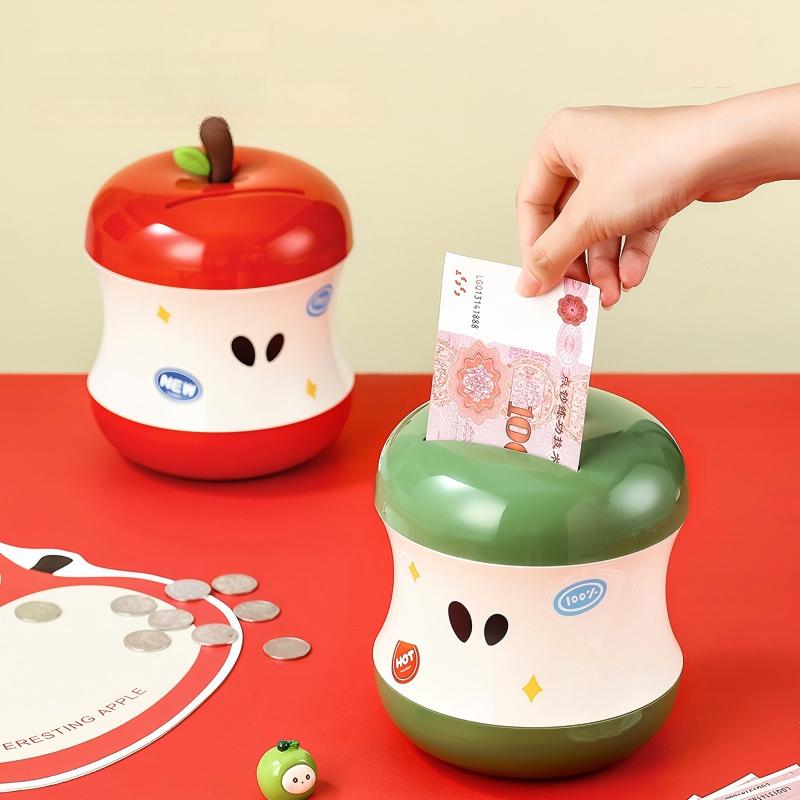
Savings jar
Core value: From physical storage to behavior shaping
Triggers of habits:
The abstract concept of “saving” is transformed into tangible physical actions (such as inserting coins or shaking the device). Each deposit is an immediate reinforcement of the saving behavior.
The cornerstone of children’s financial literacy education:
Understanding Money: Expose yourself to coins and banknotes of various denominations and materials.
Understanding accumulation: Intuitively experiencing the process of “accumulation leading to growth”.
Goal setting: Save money for a specific desire (such as a toy or a book), and learn to postpone immediate gratification for long-term goals.
The carriers of emotions and memories:
Often, they carry the blessings of the giver (such as the birthday gifts given by elders), personal short-term goals (travel fund, dream fund), or common family rituals (collecting spare change together as a family).
Applying the Mindful Approach: Making Saving More Meaningful
Setting Specific Goals: Name your piggy bank, such as “The Puppy Fund” or “The Comic Book Fund”, to give your saving behavior a story and warmth.
Initiate the investment ceremony:
Daily/weekly fixed investment: Establish a routine.
Incorporate “unexpected gains”: Put in any change, red envelopes, or additional rewards to strengthen the habit of saving.
Regular “review and celebration”:
The transparent container allows you to see the progress clearly.
The sealed containers can be opened together on significant occasions to count the results, celebrate the achievement of the goals, and discuss the next use of the money (for consumption, donation, or transfer to the bank), thus completing the financial literacy education loop.
The culture and philosophy behind it
The piggy bank is an actual metaphor for “the value of time” and “the power of small actions”. It tells us:
The most ambitious goals start with the smallest investments; the most valuable wealth is not merely the contents of the jar, but also that unwavering, quiet, accumulated patience and hope.
In the era of digital payment, it represents a more tangible and emotional financial relationship, and is a gentle resistance against consumerism and a return to the essence of materiality.
Summary: Why does the piggy bank never go out of style?
Because it addresses the most fundamental human needs in the simplest way – the confirmation of growth, the anticipation of the future, and the gentle validation of one’s own control.
Ultimately, a piggy bank, regardless of how much money it contains, is already a form of wealth in itself: it not only stores currency, but also represents discipline, a dream, and a visible journey of time that is about patience and hope.